
alan@alanshires.co.uk
  • Home
  • Voice Demos
    • Animation
    • Anime
    • Commercial
    • Narration
    • Video Games
    • Featured Work
  • Acting Demos
  • About
    • About
    • Resources
    • Testimonials
  • Clients
  • Media
    • Media
    • Press
    • Interviews
    • Reviews
  • Blog
  • Contact

Anime

Interview with Josh Martin – The Full Story

February 2, 2023 by Alan Shires

Interview with Josh MartinAnime Voiceover Artist Super Star

With it being one of my favourite genres I am super excited and pleased to be writing this article as conveniently it is also with a dear friend of mine. I first met Josh Martin at an anime convention in Yorkshire many years ago. At the time I was collaborating with my client’s magazine and shared it with him, fortunately, it went down a treat and from there we did a couple of collaborations online with workshops and webinars. Just before the pandemic hit in late 2019 there was another anime convention that Josh was attending and I was supporting the guests. At this convention, I was still working with the Magazine, and this time I thought it would be great fun to do an interview with Josh Martin!

Something I always ask myself when creating content, reaching out to and meeting new clients, and building positive relationships is, ‘How am I adding value?’ in this instance Josh is one of the most prominent anime voiceover artists in the world. This article would add a lot of value to voiceover artists worldwide.

Voicing Thousands of Characters

Having worked in anime myself, I understand the need to diversify the number of characters a voiceover actor needs in this genre. Typically, a session will range from 2 to 4 hours, and it isn’t uncommon for the actor to have to do fodder too. What is Fodder? Fodder is the one-off line here and there that appears throughout an episode. Imagine a huge fight scene with loads of spectators, a fodder line might come from a random crowd member saying something like ‘wow, that  looked like it hurt!’

It is not time- or cost-effective to hire a sole voiceover artist to do this one single line so typically booked voice actors within the cast will share all the fodder lines amongst each other. Josh has voiced A LOT of significant characters, but he is remarkably familiar with spending ten minutes at the end of the session going on a range of random fodder lines too. It is vital for an anime voiceover artist to be able to jump in and out of these characters quickly and with ease.

A Voice Actor Doing a Bit of Everything

Between our branding, social media, website, and networking, it feels a bit busy right? Oh, and that is only the tip of the iceberg, right? Josh works in video games and commercials as well as anime. Still, the thing is, anime requires a triangular skillset that requires the performer to watch the animation, follow the rhythm band, read the text AND deliver a performance at the same time. I refer to it as triangular because they will visually see the lines, the animation with the lip syncs, and the rhythm band. It’s worth noting at this point that not all companies use a rhythm band, many of them will use the three-beeps technique. The reason I am referencing both is that typically for on-screen dubbing, it is the rythmo band typically used, and in dubbing, it is the three beeps. But listening to them as well as performing and fitting the words into the mouth of the character is a fundamental skill to acquire!

Agents in Anime

I find typically across the board that voiceover agents are constantly in demand. Be it for video games, narration, anime, or commercials, everyone wants an agent. The thing is agents are vitally important! They have a trusted reputation with a vast list of clients and typically have better quality and higher paying roles than that of a pay-to-play website or what Google might give you. Typically speaking an agent is required to book stuff in anime, it isn’t essential mind you, but it will massively help you. I booked an anime role through a long string of networking, but the easiest way into anime is via the agents. The thing is, as a voiceover artist, you should have an agent anyway. It is a fundamental step to moving forward with your career and establishing a strong place and reputation for yourself in the industry.

Top Tips From the Interview with Josh Martin

My first tip is to make sure you know what tech you need. Neumann TLM 103 and Neumann U87 are massively popular in anime. The Sennheiser 416 is also another popular microphone. I am not saying ‘buy an expensive mic, and you’ll book work’ but what I am saying is the production companies are used to a particular sound, and they have trust in those products. I want to record on equipment that they are used to, it is what they use in their studios, so I want to be parallel with that standard. My next tip is to make sure you are keeping it fresh; always be thinking and making notes of new characters. I frequently record snippets of cool voices I might fall into, or I’ll make a note of interesting voices I hear whilst out and about.

The next top tip is to network! Make friends with everyone! I met Josh via a friend, Josh and I have introduced each other to a range of people, and we have both made work through our networking. Next, watch anime! You will learn a lot about the style, the character archetypes, the vocal and physical expectations, and the concepts. Anime is typically the age-old battle of good vs evil, and good often wins, but in a format where there is little to no hope.  That last shred of hope often comes off good and they win.

Finally, begin practising the emotions and the intensity levels now, do not wait to get the auditions. Practise now so you are ready for the auditions. As a British actor and voiceover artist, I once questioned if my accent was a good fit for anime, but the truth is all accents are a good fit for anime. Ok, in English, typically, it is the American neutral accent, but I have seen Australian, Russian, British, and African accents in anime. I have performed in an anime with my own accent, I have ‘poshed’ it up a bit too, and I have just made some sounds and emotes too. Anime really is the voice actors’ space to go wild and have fun.

Filed Under: Anime, Interviews

Moriarty the Patriot – The Full Story

December 10, 2022 by Alan Shires

Excellence is found in collectionA Voiceover Artist’s Journey Into Anime

My journey with anime started in 2015 when I worked at an anime convention. I had the joy of working with a non-profit organisation endorsed by Nintendo for the Pokémon games. Whilst I was at these events, I had the job of meeting several convention organisers and famous voiceover actors. Building relationships, networking, and making connections are something I am enthusiastic about anyway. Still, I was particularly excited in this instance as anime voice acting and video games are my favourite parts of the voiceover industry. Several of the people I had connected with were people I grew up watching and studying, and today I am lucky enough to call them friends.

It’s All About Them

I wanted to support the connections I made in any way I could. For the convention managers, I began helping them with bookings, tables, setting up, pulling down, and pretty much anything else I could for the conventions. For the voice actors, I wanted to support them in a slightly different capacity. Many of them have so much to offer through means of teaching and coaching, so via one of my clients’ platforms, I connected several of them together. As well as this, we collaborated with PR, and I will break down both assets below.

Voiceover Artists Teaching, Coaching, and PR

The setup for the workshops was hosted online, as the bulk of this occurred during the pandemic. They would take ten vetted voiceover artists who would perform for them. They would get critiqued by the guest and then read again. It is a very relaxed environment and follows an audition format to give them an authentic experience. But accessing the likes of Chris Rager, Josh Martin, Jason Douglas, Sean Schemmel, Kara Edwards, Sonny Strait, and Chris Sabat is not easy. These world-class voiceover artists have to offer far beyond what a single webinar or blog can offer. These people are booking the most prominent roles in anime and are setting the standards, trends, and criteria required. On a PR note, we tried our best to host as much as possible in The Buzz Magazine to promote them and compliment their incredible works.

Sowing What You Reap in Anime Voice Acting

I was exceptionally blessed one afternoon when Chris Sabat rang me and invited me to join him in casting a project requiring British accents. We were sent several sides, which we put out to our base of voiceover artists. Multiple people booked roles and had a phenomenal experience on the show. A second season was produced a year later, and the process was replicated. In this instance, I was cast for one of the roles too, which was such a huge honour too, as for several years I had trained and networked in this area.

The session was phenomenal. Seeing the beautifully designed artwork on the screen with the exceptionally composed soundtrack before anyone else was a real treat. Having it all on the screen ready for the dub was exciting and rewarding. The session was recorded over Source Connect, I, of course, was here in Leeds, UK, and they are in Dallas, Texas. I was aware the studio preferred to work with Neumann TLM 103 microphones. As my business has been heavily geared towards the more prominent companies and the bigger jobs, I have had a Neumann TLM 103 for a long-time anticipating people asking for it (which is frequent). The live session meant I was with the casting director during the session, which was great fun.

What it Takes to Work in Anime

Timing is everything. You need to be able to look at the script, watch the animation for the lip flaps and listen to the three beeps in your ear. What are the three beeps? The three beeps are an audio technique used where the artist will hear three beeps equally spread out and where the fourth beep would be expected that acts as the queue for the voice actor to begin delivering the lines. It’s worth noting the fourth beep is not played, so it’s essential to understand the timing. Within these sessions, you may be asked to do some ‘fodder’ lines. A fodder line is a random line that may occur from a character that is typically not in the cast. For example, imagine someone crossing a road, and a car jumps a red light; the character crossing may jump back and say, ‘Hey! Be careful!’ The company would not cast another actor specifically for this one singular line. The sessions range from 2 to 4 hours, so it is very typical to do a ‘fodder’ line outside the main character you read for.

Training in Anime Voice Acting

Aside from networking, it is vitally important to train in anime if this is a part of voiceover you want to work in. Taking workshops like the ones I mentioned earlier is vital. Not only is this important to capture the style of the genre, develop the characters, understand the intensity of your voice, and get used to the dubbing setup, but it is vital for the experience too. When you are listening to the four beeps in a workshop or reading a script for a casting director in a workshop, this is as real as it gets. What you do in these workshops is the same as what you will need to deliver in a session or an audition. So, perfecting every area of this and using the workshops to your advantage is vitally important and the best way to move forward in this genre.

Filed Under: Anime, Press

Anime Voiceover Press – The Full Story

November 16, 2022 by Alan Shires

New opportunitiesYour Anime Voiceover Business

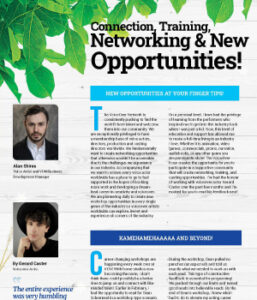
I love being a voiceover artist and one of the things people forget is that this is a business. Working in entertainment and owning a business means that we are entrepreneurs; with that, interacting with the press is essential! I love media, and I adore press, so not only have I had several articles written about me, but I have also had the opportunity to author articles with other talented professionals and on some of the industry’s finest. Addressing one of my reaching articles, ‘Connection, Training, Networking, and New Opportunities’, I wanted to share a bit about how this article came to be and hopefully share some nuggets with you on how YOU can start learning more about anime voiceover. Haven’t seen the article? Check it out here: New-Opportunities

Networking in Anime

Anime is one of my biggest loves in the voiceover industry. It invites massive theatrical characters not bound by the laws of normality or physics. Pretend, storytelling, and fun are fundamentally the core of any voice actor, and Anime encapsulates that like no other. Over the past five years, I have connected with as many Anime actors as possible. I have authored articles on them, which you can find within the media tab on my website home page. I have worked with many of these people in workshops, webinars, and in the press too. Over the years, they have become valued friends, many of whom I now call colleagues. Relationships are so essential, and meeting new people, I believe, is vitally important. Everyone wants to collaborate with talented, likable, dependable, and friendly people, so the connection is super important.

The article above was birthed out of a workshop with one of the world’s finest Anime actors, Sean Schemmel, one of the world’s most well-known Anime voiceover artists because of his role as Goku in Dragonball Z and Dragonball Super. So how did I, in the United Kingdom, come to know and work with Sean Schemmel, who is in Los Angeles?

Simply put, a mutual friend introduced us and suggested we work together. Someone I met at an event introduced me to that mutual friend. Let us take a step back here… I was at an event; I made a new contact, who later introduced me to one of his contacts, who then introduced me to Sean. Connection, making friends, and helping one another are so vitally important in voiceover, and that is how this article was birthed.

Training in Voiceover and Anime

When introduced, I shared with Sean that one of my clients, ‘The VoiceOver Network,’ regularly hosts free and paid-for training content. This was an excellent project to collaborate on and was solely focused on voiceover training in Anime. We hosted a 1-hour free webinar a few weeks later called ‘The Voiceover Hour,’ a free 1-hour webinar hosted by The VoiceOver Network. During this webinar, voice actors worldwide tuned in to learn more about Anime. It was a casual interview-styled webinar with the opportunity for people watching to ask questions. From that, a workshop was birthed where Sean took ten voiceover artists under his wing for a three-hour coaching session. The actors were provided scripts where they would audition for Sean, and he would critique their performance. After the critique, they would perform again and conclude their audition. This process was repeated with all attendees, so all the voiceover artists had the opportunity to watch and learn from each other too.

Anime Voiceover is Making a Difference

This workshop was reviewed by voiceover artist/voice actors Gerard Caster and supported and endorsed by me. Gerard was a new artist when he attended the workshop, and I was happy to be there to support him on his journey. Gerard later co-starred in an anime with me just over a year later. Gerard is exceptionally talented as a voice actor, but what did he do to be effective? How did he go from being so new in voiceover to staring in a world-class Anime? He simply threw himself into his business, trained, gained skills, and finally, networked. Gerard connected with me, worked with the world’s best coaches and gained the skills he needed to book the job. I was involved with the casting process on this project too. After being cast, the company ‘Okratron5000’ asked for my input on the best English accents for their upcoming FUNimation Project ‘Moriarty the Patriot.’

Voiceover Talent and the Press

We regularly think that press is for on-screen actors, but this is not true. As a business, the press is vital in whatever part of the entertainment industry you work in. Gerard wrote an excellent review of Sean Schemmel’s workshops, and from that, he got published in a worldwide publication, ‘The Buzz Magazine,’ for which I am privileged to also be an editor. In a future blog post, I will write more about the casting process and working inside of anime as a voice actor, but also about the series in general.

Workshops & Press Voiceover Anime Tips

To close, these are my top tips for working in anime.

  1. As a voice actor, ask yourself what genre you want to specialise in.
  2. For Anime, start networking with companies producing anime, actors working in anime, and people who engage in anime.
  3. Like with everything else, be a good, honest, and caring person – it’s not about what you can get from them but how you can serve and help them! Come into the industry with selfless ambitions to help and give, not to take and absorb.
  4. Train in voice acting and specifically anime voice acting.
  5. Train some more!
  6. Network with all the pros you have just made connections with.
  7. Write a blog, send an article to a publications company, and write reviews for the Anime voiceover coaches you work with.

Filed Under: Anime, Press

Where Does the Anime Voiceover Journey Begin?

January 13, 2022 by Alan Shires

The Journey Into Anime Voice Performance

Anime! Anime voiceover! Anime voice acting! How does that even work if you are a Northern voiceover artist like me? This is something I’ve been asking myself since the age of 8 years old. Even today, I do not have a one-fit-for-all answer. What I do have is my anime voiceover journey which I am excited to share with you. In 2014 I saw an ad for a Pokémon contest that was endorsed by Nintendo. I investigated it, and the spec asked for a confident Nintendo DS Pokémon X and Y player to audition, so I did and was successfully invited to be a part of the team. This introduced me to the world of conventions where I began networking with different convention hosts. 

In 2016 I met a group of Anime voice actors including Eric Stuart, Dan Green, Jason Douglas, Chris Rager, Josh Martin, Eric Vale, Sonny Strait, and Monica Reel. Recognise any of these folks? Dragonball, Yu-Gi-Oh! Pokémon and many more massive Anime hit shows are the platforms for these amazing actors. It was great getting to know some of these guys and I was able to chat to them about the industry, the magazine I work on, and some of the other things I was involved with. I invited a few of them to work closely with me in a more formal setting and from there via The VoiceOver Network we hosted a range of workshops and webinars. 

One of the actors I met had previously directed a production that needed British actors, he turned to me and said ‘’Where were you 6 months ago when I needed Brits?’’ It certainly did remind me that networking is so important.

Training in Anime Voiceover

These workshops were phenomenal, as a participant, I got so much value out of each workshop I attended. I was able to hear some exceptional content that helped me to understand where anime fits in voiceover, and learn about how it is similar to or different from videogames and animation. Even at conventions, I was able to share and present my material to some of the actors for feedback, and what I noticed is that these formal relationships I had started with these inspiring anime voiceover artists, had soon become friendships that remain today. 

Networking is essential in any voiceover platform and being a Northern British voiceover artist, I have such a unique niche that I can enjoy and use. As time went on, I was being introduced to more actors. I had moved away from the Pokémon role and began supporting event organisers and guest appearance agencies in the convention setting. I continued to meet more people and in 2019 several people introduced me to Chris Sabat, a very well-established anime voice actor in his own right as well as the owner of Okratron5000. Chris, one of the people I now call a dear friend, was so generous with his time, going on to teach several workshops for us and collaborating with us on a few different projects. 

Voice Actors Booking the Job!

In 2020, Chris had a project demanding British accents and asked me if I could support him with this. I was happy to support in any way I could, so we sent the audition scripts out to our base, receiving more auditions than I could count! I of course threw my own hat in the ring and auditioned too. They hired three male talents and one female talent which for them was phenomenal. As someone watching the process, I was so pleased for all four of these voiceover artists and though I wanted to book the job myself, I did not let it dishearten me as I have been in the industry long enough to know that it just sometimes is not the right fit. So how do you book work in anime voiceover? Well these four actors, joined a networking organisation, trained, and auditioned. That is such a simple route and kind of what you would expect, but my journey is much longer and bigger than that.

Anime Voice Talent for the Northern Artist

So how did it happen for me? Well after supporting the initial project I watched the animation, and the work was amazing. What I learnt is that the characters were all over the country and on the back of advice from Sean Schemmel (one of the biggest anime voiceover artists on Earth!) I decided to reach out to the Okratron5000 team to offer my insight on the different accents required in each part of the country. 

Shortly after this the show producer and director Rawly Pickens reached out to me telling me they were recording season two and would love to audition our audience again. We followed the same process and the Okraton5000 team narrowed it down to around fifteen voice actors. We discussed their needs, I listened to the material, we covered the spec, and narrowed down a new cast of three. At the end of that process, Rawly invited me to join him for a 2-hour session as there was a police officer and a member of parliament who were both perfect for my voice type – the Northern British anime voice actor.

Voicing the Anime Projects

A lot of the show was based in Durham, which is hard Yorkshire, some of it was based in York which is only twenty miles away from where I lived. So, though the series started off with a lot of London-based accents the more the story developed the more characters that came in the show and the more accents required. For me, the journey took me to a place of support, and really, my outlook on everything in voiceover is to look at how I can help, not how I can be helped. 

It was in that second season an opening for my voice type came up and this time they did not need to look for an actor, they had someone right in front of them. I was very blessed and am incredibly grateful for the process, the training, the friends I’ve made, the faith invested into me for my role both in casting and for recording, and knowing that the journey is just at the beginning not at the end. I look forward to the next project and I am excited to help and support more as the years go by as and when I am needed.

Filed Under: Anime Tagged With: anime, anime voice over

Primary Sidebar

Categories

  • Animation
  • Anime
  • Commercial
  • Corporate
  • Home Studio
  • Interviews
  • Mocap
  • Narration
  • Personal Development
  • Press
  • Reviews
  • Video Games

Archives

©2026 Alan Shires // Voice Over Site by Voice Actor Websites
Website Hosting by UpperLevel Hosting

alan@alanshires.co.uk

MENU
  • Home
  • Voice Demos
    • Animation
    • Anime
    • Commercial
    • Narration
    • Video Games
    • Featured Work
  • Acting Demos
  • About
    • About
    • Resources
    • Testimonials
  • Clients
  • Media
    • Media
    • Press
    • Interviews
    • Reviews
  • Blog
  • Contact