alan@alanshires.co.uk
  • Home
  • Voice Demos
    • Animation
    • Anime
    • Commercial
    • Narration
    • Video Games
    • Featured Work
  • Acting Demos
  • About
    • About
    • Resources
    • Testimonials
  • Clients
  • Media
    • Media
    • Press
    • Interviews
    • Reviews
  • Blog
  • Contact

Alan Shires

Breaking into Voiceover and Acting and Out of the Day Job – The Full Story

December 16, 2022 by Alan Shires

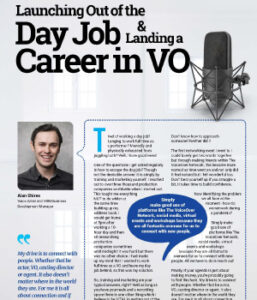
Launching Out of the Day JobA Voiceover Artist and Actor is Born!

The truth is I have not always been a voiceover artist. I come from a theatrical background and fell in love with the arts at age 10. I was always confident in drama class and had no problem delivering big characters on stage. Confidence was never something I lacked, and the laughter at something funny or the round of applause for something excellent gave me an unquenchable buzz. I never imagined the challenges I would encounter when breaking into voiceover and acting.

By no surprise, as I grew in years, I followed the usual pattern of studying acting, performing arts, and drama at GCSE, then the same in College, and then finally, university. I thoroughly enjoyed my education, and in particular, my three years in college offered me so much happiness. I obtained a Distinction* (one above a distinction, typically the highest grade) in my first year, which my lecturers were not even aware was an obtainable grade; I was the first to produce something higher than a Distinction. My end-of-year show was a promenade 10-day performance of Alice in Wonderland! I played the best role of all, the one and only Cheshire Cat!

So, where did it all go wrong? There must be a heartbreak moment, right? Well, that is kind of the case! Like most, once I reached the end of my studies and got my BA Hons in Acting, I quickly realised I was on my own and was not educated on how to work in the industry. I got an agent and the odd job here and there, but it was not going how I had hoped. As life set in, the companies dishing out the bills did not care when my next acting or voiceover job was due, so I got a job in a coffee chain!

Breaking Into Voiceover and Acting

I worked in this environment for ten years and worked up the ranks, it was full-time, paid well, came with a decent pension package and a bonus scheme, and one of my roles came with a lovely car. I really could not complain except IT SUCKED! It was mind-boggling, stressful, and almost soul-sucking! Oh, how I disliked it! So, on evenings and weekends, I worked hard to build a business for myself in performance. I prayed regularly, ‘please get me out of here!’ Eventually, my prayer came true!

I went to a London conference called ‘Surviving Actors’, which amused me because, in my mind, I was like, ‘Ha, only just surviving!’ There I discovered a seminar on voiceover for artists and actors. The word seminar amused me too because, for the last two years, all I knew was the word webinar! I went inside, and the presenter said things like:

  • You can be your own boss
  • All your skills as an actor are transferable into voiceover
  • You can be a business, an entrepreneur
  • You can work and be successful from your own home

That company was The VoiceOver Network, and that day in early 2017, I joined as a member. I dedicated a year to learning about voiceover, voice acting, and home studios. I watched every webinar, booked workshops all over the place, and started sharing what I was learning with others. Once my booth was set up to go, I began hustling work, and to my surprise, it caught on nicely!

The Article About Voiceover

Bit by bit, more work was coming in, and in 2019 I dropped the full-time brain-crunching soul-sucking job for something a bit more casual, though still not in performance, allowing me the time to progress in voiceover. We also recently discovered that my wife and I were expecting our first child, so it was a now-or-never opportunity. Sure enough, six months later, I left that job behind, became a full-time voiceover, and was doing well!

So that brought me to the article! I found myself speaking to many new voiceover artists about balancing the job of their dreams and their day gig that paid the bills. I connected with some other commercial voiceover artists and voice actors, some who were in a job, some who had broken free, some who had gone back, and others who had lost their jobs. What I wanted to do then was to help people break out and live a more fulfilled life working as a voiceover artist/voice actor in the entertainment industry.

Top Tips for Breaking Into Voiceover and Going Full-Time!

So, you will need to make a commitment to break out of a full-time day job and work in entertainment daily. It is going to be a challenge; it is going to be tiring, and it’s going to be tough, but YOU CAN DO IT… If I can, anyone can!

  1. Dedicate some time every day after or before work to learn more about voiceover, your studio, how the industry works, or something else!
  2. Start investing in yourself! It is all tax deductible, so go to workshops, invest in proper equipment, etc.
  3. Do not break the routine! Keep going every day, and if you miss a day, do not beat yourself up; just keep going; tomorrow is a new day.
  4. Do not be scared to try new things! This is a business, so you need to look at it like a business and invest in learning about marketing, social media, and all those fun things which come with owning a business.
  5. And finally! Practise, Practise, Practise. I started off on some pay-to-play sites, which were crazily oversaturated, sometimes, I booked work, but most of the time, I did not. That is normal when two hundred people chase one job! But every audition was also giving me the fundamental practise I needed to move forward to better my craft and editing.

The Voiceover Artist and Actor of Today

Now, that prayer I prayed for is a reality. I work full-time in entertainment. I am my own boss and an entrepreneur. I have even won an award and traveled to different countries. Those late nights and early mornings building my business and educating myself around the day job was worth it. All the money I invested into my business has paid for itself tenfold. I have had the opportunity to meet people from Disney and Pixar, and I have worked with clients such as Ford, Starbucks, and Sony’s Funimation, to name a few!

The exciting element is that all of this is in the past. I love helping people get into voiceover or acting but the truth is, I know this is only the beginning of the journey, the best is yet to come.

Filed Under: Personal Development, Press

Moriarty the Patriot – The Full Story

December 10, 2022 by Alan Shires

Excellence is found in collectionA Voiceover Artist’s Journey Into Anime

My journey with anime started in 2015 when I worked at an anime convention. I had the joy of working with a non-profit organisation endorsed by Nintendo for the Pokémon games. Whilst I was at these events, I had the job of meeting several convention organisers and famous voiceover actors. Building relationships, networking, and making connections are something I am enthusiastic about anyway. Still, I was particularly excited in this instance as anime voice acting and video games are my favourite parts of the voiceover industry. Several of the people I had connected with were people I grew up watching and studying, and today I am lucky enough to call them friends.

It’s All About Them

I wanted to support the connections I made in any way I could. For the convention managers, I began helping them with bookings, tables, setting up, pulling down, and pretty much anything else I could for the conventions. For the voice actors, I wanted to support them in a slightly different capacity. Many of them have so much to offer through means of teaching and coaching, so via one of my clients’ platforms, I connected several of them together. As well as this, we collaborated with PR, and I will break down both assets below.

Voiceover Artists Teaching, Coaching, and PR

The setup for the workshops was hosted online, as the bulk of this occurred during the pandemic. They would take ten vetted voiceover artists who would perform for them. They would get critiqued by the guest and then read again. It is a very relaxed environment and follows an audition format to give them an authentic experience. But accessing the likes of Chris Rager, Josh Martin, Jason Douglas, Sean Schemmel, Kara Edwards, Sonny Strait, and Chris Sabat is not easy. These world-class voiceover artists have to offer far beyond what a single webinar or blog can offer. These people are booking the most prominent roles in anime and are setting the standards, trends, and criteria required. On a PR note, we tried our best to host as much as possible in The Buzz Magazine to promote them and compliment their incredible works.

Sowing What You Reap in Anime Voice Acting

I was exceptionally blessed one afternoon when Chris Sabat rang me and invited me to join him in casting a project requiring British accents. We were sent several sides, which we put out to our base of voiceover artists. Multiple people booked roles and had a phenomenal experience on the show. A second season was produced a year later, and the process was replicated. In this instance, I was cast for one of the roles too, which was such a huge honour too, as for several years I had trained and networked in this area.

The session was phenomenal. Seeing the beautifully designed artwork on the screen with the exceptionally composed soundtrack before anyone else was a real treat. Having it all on the screen ready for the dub was exciting and rewarding. The session was recorded over Source Connect, I, of course, was here in Leeds, UK, and they are in Dallas, Texas. I was aware the studio preferred to work with Neumann TLM 103 microphones. As my business has been heavily geared towards the more prominent companies and the bigger jobs, I have had a Neumann TLM 103 for a long-time anticipating people asking for it (which is frequent). The live session meant I was with the casting director during the session, which was great fun.

What it Takes to Work in Anime

Timing is everything. You need to be able to look at the script, watch the animation for the lip flaps and listen to the three beeps in your ear. What are the three beeps? The three beeps are an audio technique used where the artist will hear three beeps equally spread out and where the fourth beep would be expected that acts as the queue for the voice actor to begin delivering the lines. It’s worth noting the fourth beep is not played, so it’s essential to understand the timing. Within these sessions, you may be asked to do some ‘fodder’ lines. A fodder line is a random line that may occur from a character that is typically not in the cast. For example, imagine someone crossing a road, and a car jumps a red light; the character crossing may jump back and say, ‘Hey! Be careful!’ The company would not cast another actor specifically for this one singular line. The sessions range from 2 to 4 hours, so it is very typical to do a ‘fodder’ line outside the main character you read for.

Training in Anime Voice Acting

Aside from networking, it is vitally important to train in anime if this is a part of voiceover you want to work in. Taking workshops like the ones I mentioned earlier is vital. Not only is this important to capture the style of the genre, develop the characters, understand the intensity of your voice, and get used to the dubbing setup, but it is vital for the experience too. When you are listening to the four beeps in a workshop or reading a script for a casting director in a workshop, this is as real as it gets. What you do in these workshops is the same as what you will need to deliver in a session or an audition. So, perfecting every area of this and using the workshops to your advantage is vitally important and the best way to move forward in this genre.

Filed Under: Anime, Press

The King of Mocap – The Full Story

December 6, 2022 by Alan Shires

SerkisActor and Voiceover Artist Together

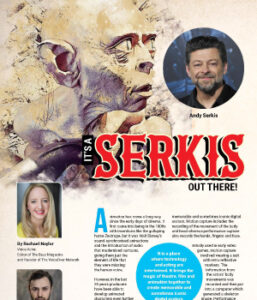
I am not giving you baking lessons, please do not worry, but when you put an actor and voiceover artist in an equation, you come out with animation, video games, anime something like that. Chuck a bit of theatrics, stunts, and skills in there, and we are in mocap and voiceover territory. Actor Andy Serkis is who I am referring to as the King of Mocap, and I will explain a little bit as to why and why these ingredients are essential.

The Power of a True Actor

Be it in a booth as a voiceover artist or in front of a thousand people in the round, the true power of an actor is born when an exceptional performance is birthed, which isn’t just recognisable, relatable, or memorable but when it has a global impact. Andy Serkis did this with Golem. He made a character that is now an archetype for the whole planet to quote, imitate, and aspire to.

PR for Actors and Voiceover Artists

One of my clients wanted a performance capture-themed edition for the magazine I regularly contribute to. Due to my love of performance capture and mocap, I was inclined to accept the task of fuelling it with plenty of content. Typically, my content consists of interviews or articles I have written to elevate, uplift, and educate, but in this instance, we have a review of an industry figure and pillar. The request to review Andy made sense because he is the king of performance capture and mocap. But this certainly was new to me. What do we talk about? We talked about the trend and bar he set for the industry and why this fantastic part of the industry is growing.

Where Does Voiceover Fit?

You can learn plenty about performance capture and motion capture (mocap) through several blogs on my website but a quick refresher on the terminology. Motion capture is just the capture of the body. Performance capture will incorporate something else, such as facial expressions or voice over. Full performance capture will have everything. So why is this area growing so much?

Simply put, it’s because it delivers the most accurate, powerful, and truthful representation of what is needed to be achieved. Humans are not mechanical; motion is fluid, and moreover, everyone is so different! No two people move perfectly the same; we all have our own unique movement signatures and quirks. When an actor performs in the volume, the digital representation perfectly captures this unique movement signature. Moreover, the actor is creating a character, so it’s not even associated with that individual’s natural movement but with something new, fresh, and creative. This makes it so desirable for video game companies and global film effects pros!

Growth in Acting, Mocap, and Voiceover

It’s commonly known that video games make more money than movies and music combined regularly. That’s insane, right? Crazy money. It is important to recognize that Andy revolutionized performance capture and brought it to a new and never seen level of popularity. Golem’s facial expressions, movements, and voice were all of Andy’s character. He made that! Like in every other element of acting, he was a distinctive character, and it was so impactful that it made history and became the icon we all know and love today.

Working in Mocap or Performance Capture

Andy was responsible for the beautiful studio in London known as the Imaginarium, which is home to one of the world’s biggest, most up-to-date, and most beautiful volumes. Seeing thousands of actors go through and countless projects done, we can see that the desire for performance capture since Golem has hit the entertainment industry massively. More studios opening can only mean increased content is being produced, and more and more companies are taking performance capture projects up.

My Experience in Mocap and Voiceover

The likes of Andy Serkis and Benedict Cumberbatch (who played Smaug in The Hobbit) inspired me a lot. Being theatrically trained, I typically like the more prominent characters. Voiceover naturally brings me into animation, video games, and anime. However, my consistent work on-screen and my training in front of the camera means I dial it back regularly to offer a more naturalistic performance. I love all forms of acting and voice over, but the most fun for me is the big surreal characters like the ones we have been talking about in this blog. I love bringing big characters to life, be they weird, surreal, mysterious, fairy tale, or fable. I feel that as an actor and voiceover artist, I get satisfaction from my work when I produce something that is seen as truthful and powerful.

Simply put, doing just that with these massive characters is the best. I have played a dinosaur, a dog, a lion cub, a robot, a politician, a barista, and many other characters, and having a diverse range is important. But let me close with this, ask yourself, what do you love to do, and why do you love to do it? Always aspire and shoot for the stars. The industry is constantly training, and there is so much opportunity to do amazing things. Learn new skills, train regularly, allow yourself to dream and imagine, and most importantly, have fun. There are some phenomenal actors out there, and I believe there is space for many more, I look at the chaps I have mentioned here as inspiration, and I am grateful to them for setting such a fantastic bar and trend because it shows me where I need to work at.

Filed Under: Mocap, Reviews

Voiceover Feedback: Striking a Chord – The Full Story!

November 25, 2022 by Alan Shires

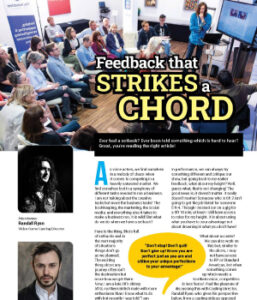
Feedback that strikes a chordConstructive Voiceover Feedback

Voiceover feedback is so important! Sometimes it reassures us and makes us feel warm and fuzzy. Other times it hurts! Sometimes it really hurts! As voice actors, we are performers, and our craft is a massive part of our life. Pain in that area brings doubt, frustration, sadness, lack of confidence and low self-esteem. So how do we deal with this and direct it positively? Well let me start by talking about the where this came from and delve into the wonderful world of video games.

Voiceover and the World of Video Games

My counterpart in the article is Randall Ryan, a video game casting director and a dear friend. I chose to calibrate with him on this article as we were able to create a relationship between feedback from the performer and the casting director. We both love music, and whilst discussing the situation I will allude to in the next paragraph, we discovered feedback often seems like a melody – it contains harmony but needs some dedication and practice! It is beautiful when it all goes well.

The Artist Trying to Make it Work

I was told by another casting director that they could not book me for a job without a visa. In fact, as a voiceover artist, this is something we hear ALL the time. There is some truth to it, so for example, if you are applying for work in the USA and you are not from the USA, you need a visa. However, in this instance I am a company in my own right selling a service from my own country. Could you imagine if we could not work internationally on a bigger scale? We would not be able to buy anything from Amazon.com if you are in the UK, or you could not order Yorkshire Tea from the US if you were in the UK! Ok maybe they will not want Yorkshire tea (though they should!), but you get the example, I hope. So, what is the situation for a voice actor in this situation? Well, there is a simple form called a W-8BEN that is required to be filled out.

Keeping Your Head Up

So, for me the feedback that struck a chord was that I was not in America or have a working visa. In one respect, that does help make everyone’s life easier. However, we can work internationally, and that is why it struck a chord. Feedback often can be less practical and instead more craft driven, and that is where it can feel a bit more personal. We must remember that the casting director has something they want in their mind from the onset. We need to fit that shape and present them with an alternative they did not realise they wanted but was so good that it is too irresistible to ignore.

The Voice Actor and the Casting Director

As Randall is a friend and an industry panel in video games, I wanted to get his opinion on things to consider when casting for a role. His first point on this situation is he would just use the W-8BEN form above and get the actor booked in – his view on it was to give the role to the best actor and keep it as genuine as possible. Quality over convenience. What I will say, though, is that everyone is at various levels, and some companies just do not have the budget to pull talent from outside their country, even if they are the best for the role. What we must realise is that there may be half a dozen people at the final stint all of which can nail the job.

Randall felt enthusiastic about the brief being adhered to, and having also attended and facilitated a few of his workshops, I also quickly learnt from collaborating with him that he loves a ‘truthful’ performance. What does that mean? Well, it means the voiceover artist does not simply represent the character, but they become and project the character leaning on internal experiences, decisions, and stories.

Where to Train in Video Game Voice Acting?

I mentioned above the workshops I have done and facilitated with and for Randall. These happen all over the world with loads of amazing people. As an actor it is so important to keep training, acquire new skills and refine your craft. It’s like going to the gym, you need to keep those muscles used, healthy and looked after. It is easy to forget skills and disciplines, and vital to push into the most profound elements of the role.

Bringing Something Different to the Table

I mentioned having a second take up your sleeve, which presents the casting director with something they did not expect while presenting something genuine that they love. Let us use a military officer for example, we have that stereotype. [Trigger warning] But what if this military character just saw his team blown up? It brings a different slant to the role. Still totally genuine to the character and believable, but it offers a different flavour. The second take should be so different from the first one, but both need the commitment, quality, and passion of a true performer

Voiceover Feedback Taking the Next Step

Keep at it! Do not take it personally! Keep training, and do not give up! That is my number 1 tip. Network and make friends, be nice to people, and never give up. That is my complete list of tips. This is a business, and we must hustle, and network just like in any other industry, whilst keeping our craft and material fresh. The more you hustle the more opportunities you will see, and ultimately the more clients you will make and work you will book. Apply feedback positively, and do not take anything too personally.

Shrug it off and move on to the next job, even if it is hard to hear initially. I was given a tip once, audition and, forget about it, move on to the next job. That is excellent advice! You may never hear from them again, so no need to get too down in the dumps or upset. That said, sometimes it can mean a lot to you, right? It might be that dream client! The key is to keep them coming back; more and more auditions mean they want to book you, think you’re good, and get close to regular work.

Filed Under: Press, Video Games

Anime Voiceover Press – The Full Story

November 16, 2022 by Alan Shires

New opportunitiesYour Anime Voiceover Business

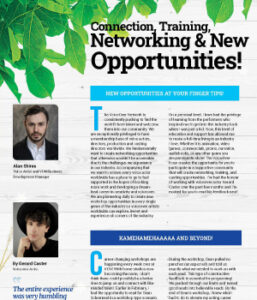
I love being a voiceover artist and one of the things people forget is that this is a business. Working in entertainment and owning a business means that we are entrepreneurs; with that, interacting with the press is essential! I love media, and I adore press, so not only have I had several articles written about me, but I have also had the opportunity to author articles with other talented professionals and on some of the industry’s finest. Addressing one of my reaching articles, ‘Connection, Training, Networking, and New Opportunities’, I wanted to share a bit about how this article came to be and hopefully share some nuggets with you on how YOU can start learning more about anime voiceover. Haven’t seen the article? Check it out here: New-Opportunities

Networking in Anime

Anime is one of my biggest loves in the voiceover industry. It invites massive theatrical characters not bound by the laws of normality or physics. Pretend, storytelling, and fun are fundamentally the core of any voice actor, and Anime encapsulates that like no other. Over the past five years, I have connected with as many Anime actors as possible. I have authored articles on them, which you can find within the media tab on my website home page. I have worked with many of these people in workshops, webinars, and in the press too. Over the years, they have become valued friends, many of whom I now call colleagues. Relationships are so essential, and meeting new people, I believe, is vitally important. Everyone wants to collaborate with talented, likable, dependable, and friendly people, so the connection is super important.

The article above was birthed out of a workshop with one of the world’s finest Anime actors, Sean Schemmel, one of the world’s most well-known Anime voiceover artists because of his role as Goku in Dragonball Z and Dragonball Super. So how did I, in the United Kingdom, come to know and work with Sean Schemmel, who is in Los Angeles?

Simply put, a mutual friend introduced us and suggested we work together. Someone I met at an event introduced me to that mutual friend. Let us take a step back here… I was at an event; I made a new contact, who later introduced me to one of his contacts, who then introduced me to Sean. Connection, making friends, and helping one another are so vitally important in voiceover, and that is how this article was birthed.

Training in Voiceover and Anime

When introduced, I shared with Sean that one of my clients, ‘The VoiceOver Network,’ regularly hosts free and paid-for training content. This was an excellent project to collaborate on and was solely focused on voiceover training in Anime. We hosted a 1-hour free webinar a few weeks later called ‘The Voiceover Hour,’ a free 1-hour webinar hosted by The VoiceOver Network. During this webinar, voice actors worldwide tuned in to learn more about Anime. It was a casual interview-styled webinar with the opportunity for people watching to ask questions. From that, a workshop was birthed where Sean took ten voiceover artists under his wing for a three-hour coaching session. The actors were provided scripts where they would audition for Sean, and he would critique their performance. After the critique, they would perform again and conclude their audition. This process was repeated with all attendees, so all the voiceover artists had the opportunity to watch and learn from each other too.

Anime Voiceover is Making a Difference

This workshop was reviewed by voiceover artist/voice actors Gerard Caster and supported and endorsed by me. Gerard was a new artist when he attended the workshop, and I was happy to be there to support him on his journey. Gerard later co-starred in an anime with me just over a year later. Gerard is exceptionally talented as a voice actor, but what did he do to be effective? How did he go from being so new in voiceover to staring in a world-class Anime? He simply threw himself into his business, trained, gained skills, and finally, networked. Gerard connected with me, worked with the world’s best coaches and gained the skills he needed to book the job. I was involved with the casting process on this project too. After being cast, the company ‘Okratron5000’ asked for my input on the best English accents for their upcoming FUNimation Project ‘Moriarty the Patriot.’

Voiceover Talent and the Press

We regularly think that press is for on-screen actors, but this is not true. As a business, the press is vital in whatever part of the entertainment industry you work in. Gerard wrote an excellent review of Sean Schemmel’s workshops, and from that, he got published in a worldwide publication, ‘The Buzz Magazine,’ for which I am privileged to also be an editor. In a future blog post, I will write more about the casting process and working inside of anime as a voice actor, but also about the series in general.

Workshops & Press Voiceover Anime Tips

To close, these are my top tips for working in anime.

  1. As a voice actor, ask yourself what genre you want to specialise in.
  2. For Anime, start networking with companies producing anime, actors working in anime, and people who engage in anime.
  3. Like with everything else, be a good, honest, and caring person – it’s not about what you can get from them but how you can serve and help them! Come into the industry with selfless ambitions to help and give, not to take and absorb.
  4. Train in voice acting and specifically anime voice acting.
  5. Train some more!
  6. Network with all the pros you have just made connections with.
  7. Write a blog, send an article to a publications company, and write reviews for the Anime voiceover coaches you work with.

Filed Under: Anime, Press

Post Covid-19 Voice Over: Taking the Crown Back! – The Full Story

November 10, 2022 by Alan Shires

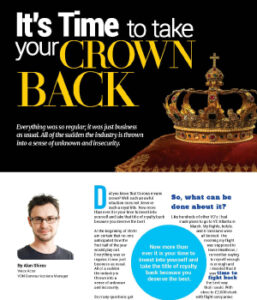
Its Time to take your Crown backVoice Over Life vs a World Full of Germs!

When the pandemic hit, I noticed many voiceover actors starting to panic. This panic was born out of several roots. The first is the fear of not being able to work! Voiceover artists were used to going to the studio to record a session. The pandemic closed the studios leaving the voiceover actor there twiddling their thumbs. Let us circle back to this a little bit later in this blog. The second panic was birthed out of the fear of getting scared. Getting sick is an interesting concept, right? We are all used to getting sick from time to time but all of a sudden, it was a big deal for the entire world. But why was this? Well, there is an extensive list of reasons why and we all have our own opinion on the pandemic, but we can imagine that voiceover artists were concerned because the damage to their health could be crippling for their business. Post covid-19 voice over would be a new frontier.

The Number One Tool for Post Covid-19 Voice Over

Truth be told voice actors should have been concerned about their vocal health long before the pandemic ever hit the planet. I remember working in retail, whilst in retail, if you got sick the management really did not care all that much. Similarly, I have observed this behaviour in several other areas such as supermarkets, offices, and yes even certain parts of the health sector (crazy right?). These days we behave the opposite, we stay home and lock down until we are better – in fact, this is better when measured against its former counterpart. But here is the thing, the above jobs ‘can’ be done should the individual be well enough to conduct them. I barely ever took a day off when sick in retail, in fact – I think in ten years maybe 2/3 days tops were processed as sick until the point of me leaving and becoming a full-time voice actor. So though one can scan tins whilst unwell, they probably should not! A voiceover artist, on the other hand, REALLY should not work! Why? Because their number one tool, THEIR VOICE is already in a highly compromised position, and the more they push it the more significant the damage.

The Future of Voiceover When Battling Sickness

It is not about the next job! It is about the next several years of your career. Unlike a cut on the arm or a burn on the hand, your voice does not heal like minor flesh damage. Even broken bones can heal better! Sometimes the damage to our voice is irreversible; thus, the pandemic simply brought truth to life for voice actors. You must be careful, stay safe and look after your voice!

The Artist Had to Change!

No one likes to change, right? WRONG – I love a bit of change! Tons of voice actors were ready for the pandemic because when the studios closed, they had their home booth prepped and ready to go! Since then, voiceover booth installation is booming! Everyone wants their own. Studios still take a lot of the work for bigger jobs and for those folks without a booth, but overall voice actors were either ready for the pandemic or quickly changed to meet the challenge.

The Claim to Royalty a Voice Actor MUST Proclaim

When the pandemic started, I authored this article to deliver a powerful truth to the industry. The word Corona comes from the word crown, and the virus took precedence worldwide. The play on words here is that it was time to take the crown back. A nasty virus did not deserve to be the royalty of the world. It absorbed our times, lives, emotions, happiness, and, yes… sadly, even loved ones. I watched this, and I thought, enough is enough, and I decided it was time to fight back. Every artist needed to stand up and say, ‘this pandemic is not taking my joy; I will fight back!’ ‘This pandemic will not steal my career, I will fight back!’ And finally, ‘this pandemic is not going to ruin my life, I will fight back!’

Post covid-19 Voice Over Artists Fight Against Sickness

Whether it is a tickle or a nasty bout of flu, the top tip for a voiceover artist and voice actor is to rest! Do not overdo it; listen to your body and recover! You are no good to anyone if you are exhausted, and the thing is, the client will hear the difference in your voice too!

The next tip is to invest in a nice jar of honey. Manuka honey, in particular, has had hundreds of thousands of dollars invested into research. Manuka honey has bacteria and enzymes inside it that will combat germs of all branches. Furthermore, honey offers a two-fold strike for a voice actor because it will soothe the vocal cords and some of the properties are proportionately relevant for the healing of the vocal area.

Next, if you have access to a local steam room, inhale as much steam as possible! Baths and showers will do if not. DO NOT stockpile on lozenges; they simply cover the pain and do not deal with the problem! Numbing the pain will damage your vocal cords further if you continue pushing it under the effects of these products. By all means, take one before bed if it helps you sleep; just do not use it as a tool to get you through a session.

This brings me to my next point! A voiceover actor MUST say no if a client asks them to do something that will damage them further. They must say no if the session has hit its limits vocally. If there are some physically challenging elements to your session, leave them to the end, do not let it wreck the rest of the session. In short, be bold and know when enough is enough. If you get hurt in the session, the client has a poor product, and you are out of work the next day.

Finally! Might seem simple but stay hydrated! Always have plenty of water and avoid caffeine, chocolate, and dairy leading up to the session. It can bung you up, and it is not worth the risk if you can avoid it.

Filed Under: Personal Development, Press

  • « Go to Previous Page
  • Page 1
  • Page 2
  • Page 3
  • Page 4
  • Page 5
  • Go to Next Page »

Primary Sidebar

Categories

  • Animation
  • Anime
  • Commercial
  • Corporate
  • Home Studio
  • Interviews
  • Mocap
  • Narration
  • Personal Development
  • Press
  • Reviews
  • Video Games

Archives

©2026 Alan Shires // Voice Over Site by Voice Actor Websites
Website Hosting by UpperLevel Hosting

alan@alanshires.co.uk

MENU
  • Home
  • Voice Demos
    • Animation
    • Anime
    • Commercial
    • Narration
    • Video Games
    • Featured Work
  • Acting Demos
  • About
    • About
    • Resources
    • Testimonials
  • Clients
  • Media
    • Media
    • Press
    • Interviews
    • Reviews
  • Blog
  • Contact